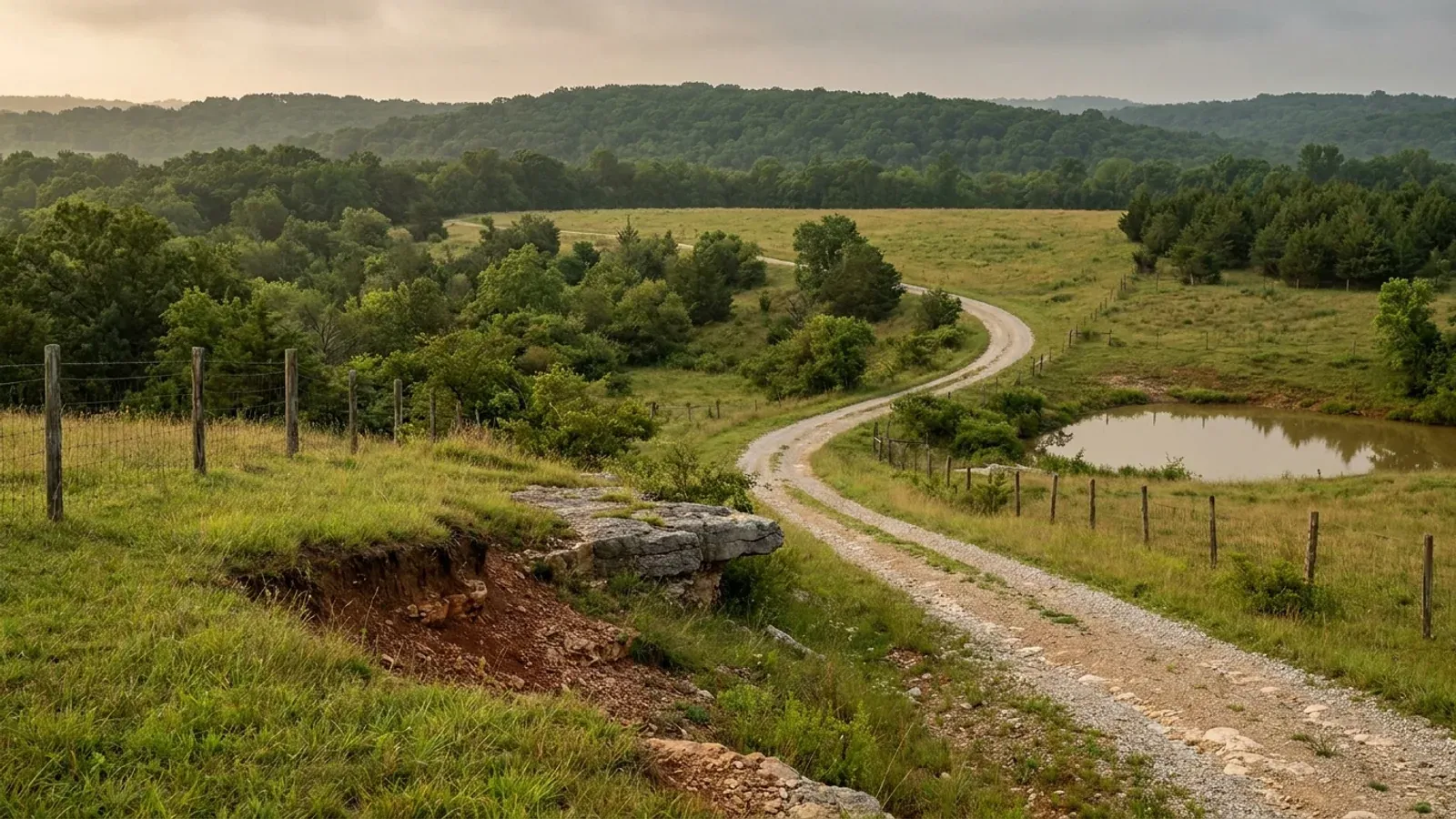
Barndominium Builders in St. Louis, MO
The City of St. Louis is not part of St. Louis County and has not been since 1876. It is in no county at all — no county building department above it, no county zoning reaching in, no county tier to fall back to — which makes the City and the County peers rather than parent and child, with different adopted codes, different permitting and different contractor rules, and a mailing address that will not tell you which of the two you are standing in. It also sits outside Missouri's county classification system entirely: it is not a first-, second-, third- or fourth-classification county under RSMo 48.020 and it is not a charter county either, so the statutory tests that decide whether a Missouri county may even have a building code have nothing to say here. And it is not a place to buy land: 279,695 people on 61.72 square miles is 4,532 to the square mile, the City's zoning ordinance has no agricultural district and sets a 2,000-square-foot minimum lot in its least dense residential district, and the federal agricultural census publishes no farm profile for the City at all. For a barndominium on acreage the land is in Franklin, Warren, Lincoln and Jefferson counties and in western St. Charles County.
St. Louis at a glance
- Independent city
- St. Louis (independent city)
- Population
- 279,695
- ZIP codes
- 63101, 63102, 63103, 63104, 63106, 63107, 63108, 63109, 63110, 63111, 63112, 63113, 63115, 63116, 63118, 63120, 63139, 63147
- Site visits
- Same-week site visit
Building conditions in St. Louis
Missouri sets no residential building code and no statewide way of adopting one, so the first question on any parcel is not what the code says — it is whether there is one. Only counties of the first and second classification may adopt a building code at all, and classification is set by assessed valuation rather than population, so a small county can hold the power while a much larger one does not. Zoning is a separate power with its own answer, granted only after a vote of the people and repealable by another. What changes from one jurisdiction to the next is whether the work is inspected, who issues the permit, what that office charges, how the parcel is zoned, and the design figures your drawings have to satisfy.
Mo. Const. Art. VI, § 31 (Const. of 1945, amended 5 November 2002), read at revisor.mo.gov 6 September 2026; City of St. Louis, 'City Government Structure' (www.stlouis-mo.gov), read 6 September 2026.
St. Louis City Revised Code § 8.12A.030 and § 25.11.010, in the Revised Code of the City of Saint Louis, 2020, Annotated, codified through Ordinance No. 72042 (enacted 30 October 2025), read 6 September 2026; St. Louis County Revised Ordinances Title XI chs. 1102, 1103 and 1108, as recorded in research/statewide/contractor-licensing.md § 3 (5 September 2026).
U.S. Census Bureau, Vintage 2024 Subcounty Population Estimates, sub-est2024_29.csv (SUMLEV 162, place 65000), and the 2024 Census Gazetteer places file (GEOID 2965000, ALAND_SQMI 61.72), both downloaded from www2.census.gov 6 September 2026.
USDA NASS, 2022 Census of Agriculture, Missouri County Profiles (www.nass.usda.gov): no profile is published for St. Louis city, FIPS 29510, while St. Louis County, FIPS 29189, has one. Checked 6 September 2026.
St. Louis City Revised Code § 26.12.010 (Ord. No. 59979, § 4, 1986), § 26.20.025 and § 26.20.090 (as last amended by Ord. No. 72027, § 1, 11 July 2025), read 6 September 2026.
St. Louis City Revised Code § 25.11.010, enacted by Ordinance No. 70795, § 2, 6 July 2018, with amendments at § 25.11.020; adopted in conformity with RSMo 71.943 (effective 28 August 2005). Read 6 September 2026.
Also worth knowing before you build in St. Louis
- The City fills in Table R301.2(1) — most Missouri jurisdictions do not
- The City's amended climatic and geographic design criteria table reads: ground snow load 20 psf; design wind speed 115 mph with topographic effects NO; seismic design category C; weathering severe; frost line depth 30 inches; termite moderate to heavy; winter design temperature 5 °F; ice shield underlayment not required; flood hazards 24 May 2011; air freezing index 963 °F-days; mean annual temperature 55 °F. Note the seismic disagreement: the USGS ASCE 7-16 service returns 0.453 g short-period and category D at Site Class D for the same point. The adopted figure governs the permit.
- A contractor licence with no threshold at all
- In the City of St. Louis a contractor needs a Construction Industry Contractor Graduated Business License from the License Collector before doing the work. There is no dollar figure and no scope test below which it is not needed — the ordinance catches anyone who carries on "the business of a contractor", and its definition list expressly names building contractors, home building contractors, carpentry contractors, prefabricated buildings contractors and foundations contractors. The tax is graduated on the number of St. Louis employees, not on contract value.
- What a City building permit costs
- The City's own fee table charges a $25.00 application fee, then $6.00 per $1,000 of estimated construction cost, or fraction of it, for a new-construction or addition permit, with a $15.00 minimum. A certificate of floodplain status is $10.00. Permit valuation is the total estimated cost including site preparation, grading, excavation, backfill, structural work, interior and exterior finishes and the plumbing, mechanical and electrical work.
- New houses here must be built solar-ready
- The City added Appendix RA, Solar Ready Zone – Residential, and Appendix CA for commercial work to its Energy Conservation Code. New one- and two-family dwelling, townhouse, multifamily and commercial plans have to illustrate the feasibility of a future solar energy system installation. It is a plan-set requirement, not an obligation to install anything.
- The zoning code says nothing about cladding — the rule lives in the historic districts
- Title 26, the City's zoning code, sets no exterior material standard, no minimum roof pitch and no eave requirement for a dwelling. Chapter 26.20, the "A" Single-Family Dwelling District, runs to use regulations, accessory dwelling units, conditional uses, parking, height, front, side and rear yards and density of population, and says nothing about what a wall or a roof may be made of. The form-based districts at Chapter 26.82 are overlays adopted area by area by ordinance, each with its own regulating plan and building envelope standards, so they are a mechanism rather than a citywide rule. The residential code points the same way from the other end: § 25.11.020's amended R105.2 lists "New aluminum, steel, fiber cement, hardboard, or vinyl exterior siding with no change to existing openings" among the work that needs no permit at all on a property of four units or fewer. Steel siding is named in the City's own code as ordinary work. Where the question does bite is Title 24. Inside a City historic district, or on a landmark or landmark site, no one may construct or alter an exterior architectural feature without a permit that the Building Commissioner routes to the Cultural Resources Office, and Title 24 defines that feature to include "the kind, color, and texture of the building material" open to public view from the street. The standards themselves are not in Title 24 — each district's designation ordinance carries its own historic district plan and historic district standards, which the Preservation Board reviews at least every five years — so the answer for a particular address is that district's ordinance and no other. A preservation review district under Chapter 24.36 is a narrower thing again: it reviews the effect of demolitions on an area, not cladding.
St. Louis City Revised Code § 25.11.020, Table R301.2(1), as amended (Ord. No. 70795, 6 July 2018; Ord. No. 71285, 11 February 2021; Ord. No. 71990, 25 February 2025), read 6 September 2026; USGS Seismic Design Web Service, ASCE 7-16, Risk Category II, queried 5 September 2026 and recorded in research/statewide/site-conditions.md § 1d.
St. Louis City Revised Code §§ 8.12A.020, 8.12A.030 and 8.12A.050, Chapter 8.12A enacted by Ordinance 61094 (1988); City of St. Louis License Collector, "Apply for a Construction - Contracting Business License", read 6 September 2026.
St. Louis City Revised Code § 25.11.020, Table R109.3.1 and §§ R109.2.1—R109.2.2 as adopted into the City Residential Code, read 6 September 2026.
St. Louis City Revised Code § 25.13.020, appendices added by Ordinance No. 71063, § 1, enacted 23 December 2019; the City's Building Division Permits page states the requirement applies from 23 January 2020. Both read 6 September 2026.
St. Louis City Revised Code Title 26 (Zoning), ch. 26.20 ("A" Single-Family Dwelling District, §§ 26.20.010—26.20.090) and ch. 26.82 (Form-Based Districts, §§ 26.82.010—26.82.080, Ord. No. 69199, 18 July 2012), read for exterior-material, roof-pitch, eave and design-review provisions; § 25.11.020, amended Section R105.2 work-exempt list; Title 24 (Cultural Resources) §§ 24.04.030 (definitions of "design and construction standards" and "exterior architectural feature"), 24.16.090, 24.16.130, 24.20.010 and 24.36.010, all Ord. No. 64689, 1999. Read from the Revised Code of the City of Saint Louis, 2020, Annotated, through the Municode JSON API (productId 16330, job 487173, Supplement 11, codified through Ordinance No. 72042 enacted 30 October 2025), 9 September 2026, with the Title 24 definition re-read from an independent second request the same day
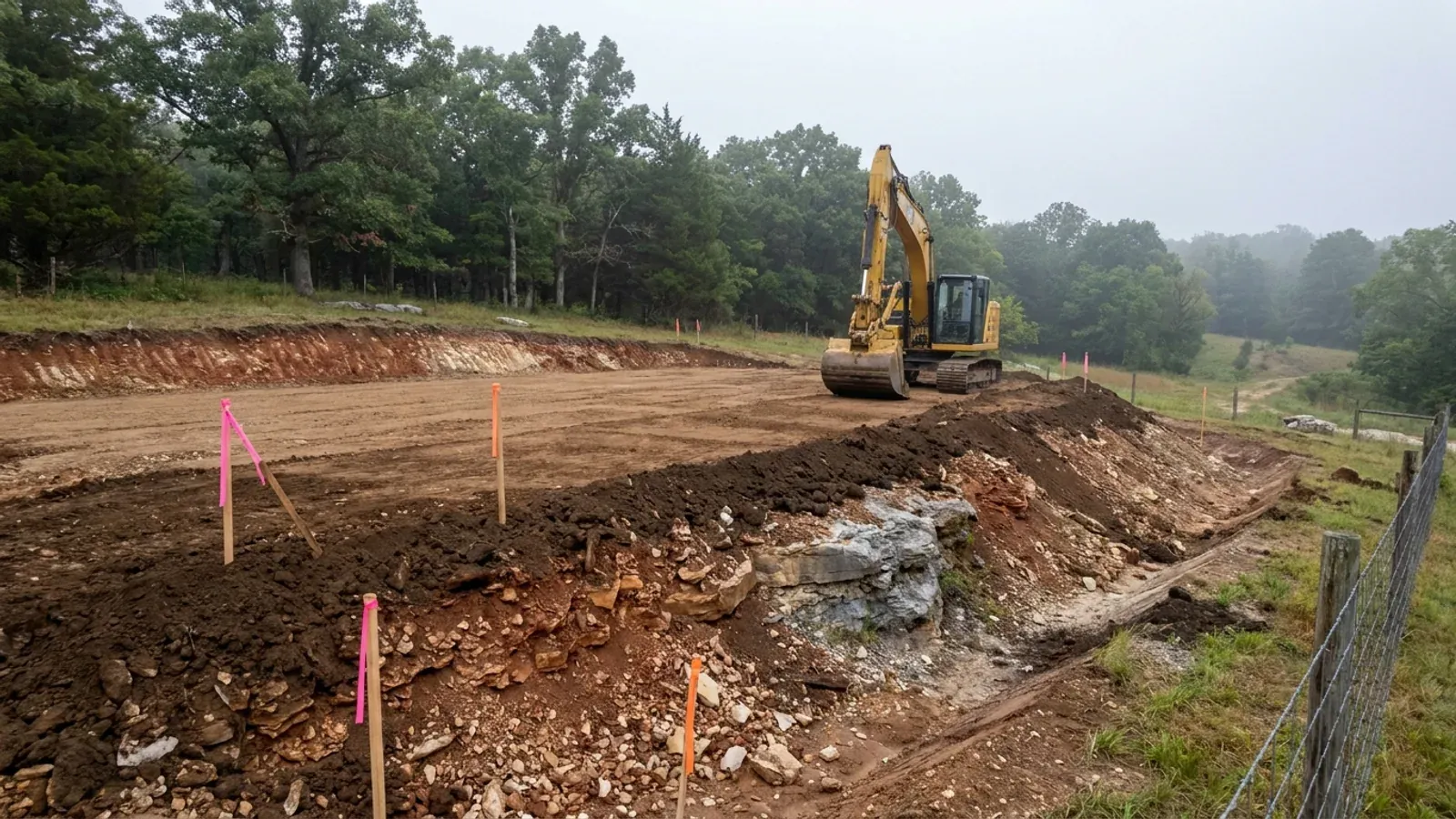
The expensive surprises are in the ground, not the building
What moves a Missouri budget is usually below grade, and which problem you have depends on where in the state you are. Across the Ozarks it is karst: the Department of Natural Resources maps more than sixteen thousand sinkhole points, and what matters there is what is under the slab rather than what the slab sits in. Across the north and centre it is claypan — dense, slow-draining subsoil that perches water above it for months of the year. In the Bootheel it is deep alluvium carrying the highest seismic demand in the state, where the same soils modelled for liquefaction attack post embedment and slab bearing rather than the frame above them. The same ground then decides the septic system, and Missouri does not run that on a percolation test alone: the rule allows a perc test or a soil morphology examination in a profile pit, and the authority reviewing your parcel picks which. Where a drainfield sits near a sinkhole's drainage, perc testing on its own is not permitted at all. Whether that authority is the state or your own county is itself a local question, and it changes what you have to file. So the site work, the foundation and the drainfield get resolved together rather than one at a time. We price the dirt before we price the building.
What we build in St. Louis
All nine services are available in St. Louis. What a build costs depends far more on the parcel than on square footage, so we price against your land rather than publishing a rate card.
Custom Plans
Barndominium floor plans drawn to your parcel and your soil, and to whichever Missouri authority — a county, a city, or none at all — will review them.
Barndominium Kits
Barndominium shell packages delivered to your Missouri land, drawn to the criteria your own county or city publishes — because the state publishes none.
Turnkey Builds
Start to finish barndominium construction in Missouri: the permits that genuinely apply, site work, shell and interior finish, under one contract.
What a build looks like
Three stages every St. Louis project passes through, from a raw parcel to a finished home. Site work first, because that is where the budget is decided.
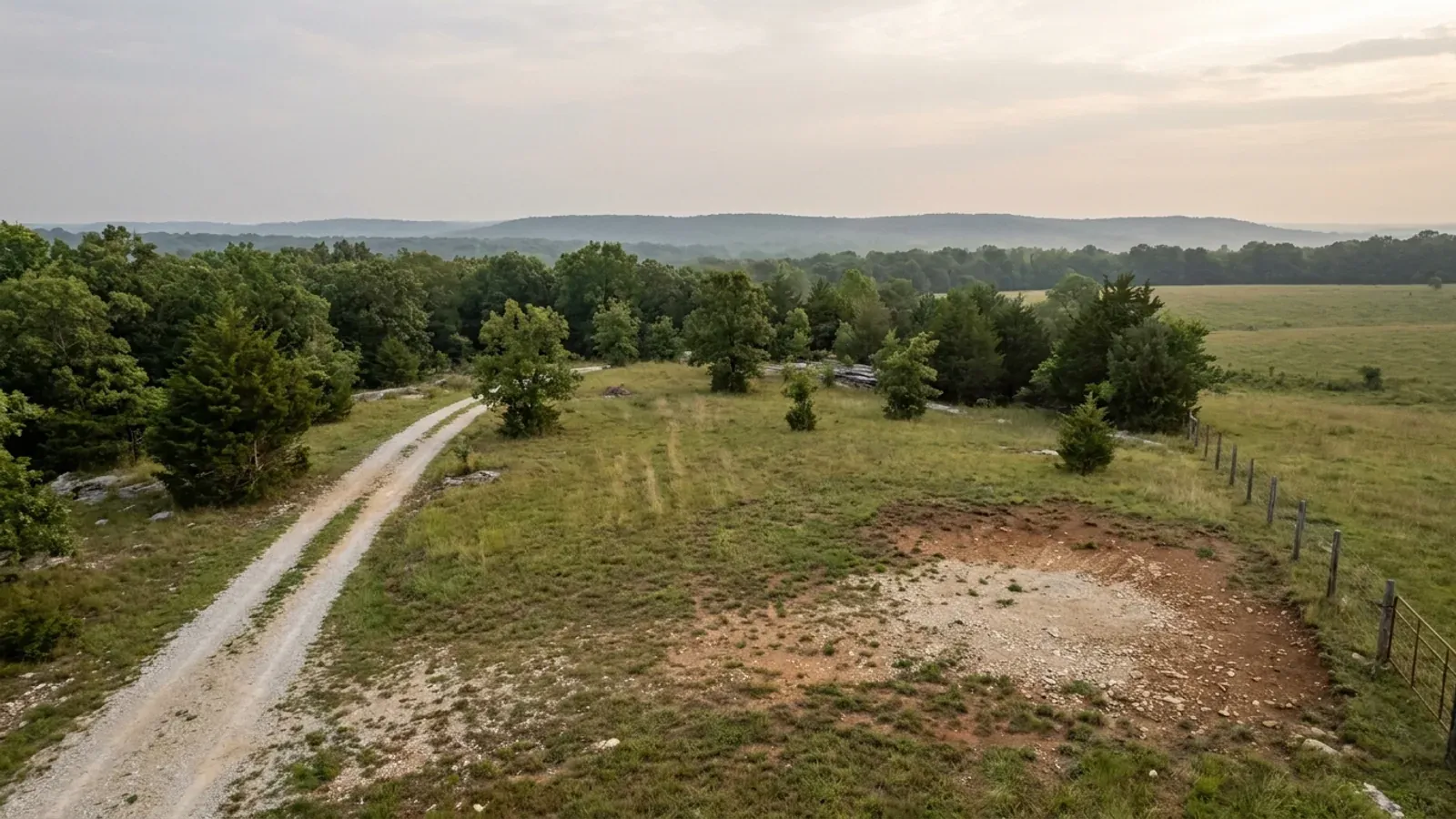
The parcel
Zoning, setbacks, flood zone and utility access get checked before anything is drawn.
Pad and permit
Clearing, grading and a compacted pad, while the submittal works through whichever office issues the permit where you are building.
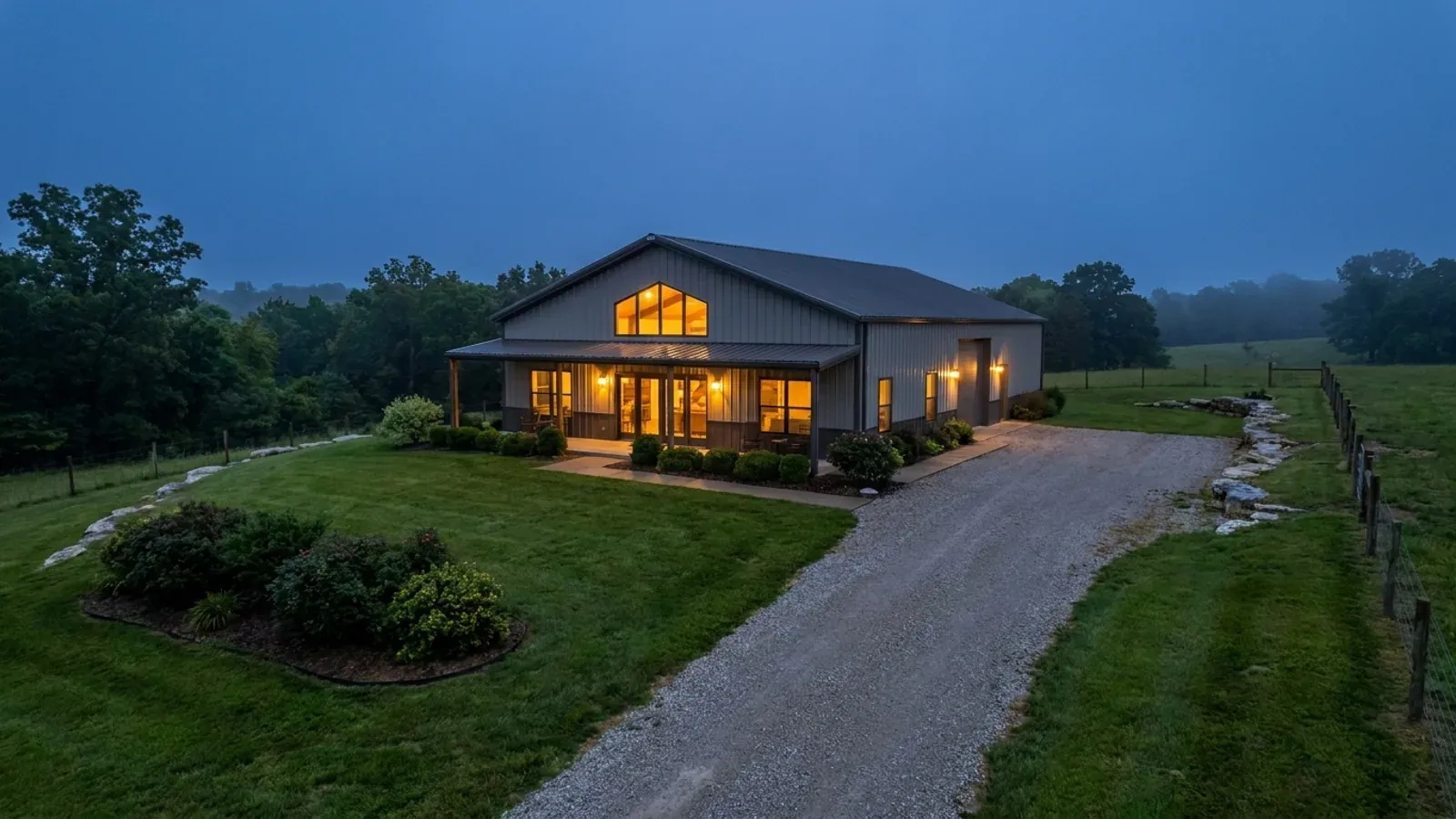
Frame to finish
Shell erected and dried in, then systems, insulation and interior finish through to CO.
Those are the rules where you are building in St. Louis. Tell us what you want to build and we will draw it to them.
Where we build around St. Louis
St. Louis (independent city) and the rural land around it. The buildable acreage for a project this size usually sits outside the city limits, which is frequently what changes who issues your permit.
Keep reading
The questions that usually come next once you know what St. Louis allows.
Barndominium Cost Guide
Sourced per-square-foot ranges by tier and by size, with a calculator built on the same figures.
Read itIs It Legal in Missouri?
Classification, zoning, the HOA gate, and why "nonresidential farm building" does not cover a home.
Read itHow Long Does It Take?
Census build-duration data, and what actually sets the permit clock where you are building.
Read itNearby areas we build in
Others we cover nearby, and they are not interchangeable. One may be a county with an adopted building code, another a county with no legal authority to have one, another a city that permits inside its own limits whichever county the land sits in. So the office that issues the permit, whether anyone inspects the work at all, the fees, the zoning and the design figures can differ from one card to the next — sometimes across a single property line.
Building in St. Louis: common questions
8 questions we get asked most often about building in St. Louis. If yours is not on the list, ask it directly.
Is the City of St. Louis part of St. Louis County?
Can I actually build a barndominium inside the city limits?
Which building code applies in the City of St. Louis?
Does a county building department or county zoning reach into the City?
Do I need a contractor licence to build in the City of St. Louis?
Does Missouri's agricultural exemption help me here?
What design figures does the City publish for a build here?
What does the City want submitted with a permit application?
Building in St. Louis?
Start with the plan. Tell us what you want to build and we will draw it, then confirm which office issues the permit for your parcel, what it will let you put there, and what wind load it has to meet. That conversation costs nothing.